Alternatives to Pain-Relief Medication
After Total Joint Replacement
|
| |
|
|
While pain-relief medications do help with your recovery, relying on too much for too long can pose some health risks.
The opioids you may have received in the first days after surgery are highly addictive and physicians prescribe the shortest course possible for pain relief.
Over-the-counter NSAIDS (ibuprofen, acetaminophen) help considerably. But if used for too long, these can raise your risk for heart attack, stroke or high blood pressure. Acetaminophen in too high doses can harm your liver. And NSAIDS can raise your risk for gastrointestinal problems, such as bleeding and ulcers.
Hopefully, you’ve been able to reduce your reliance on post-op pain-relief meds over time. If you’re still struggling with significant pain, talk to your surgeon, who can check for problems such as infection or loosened prosthesis in your new joint or a bursitis or tendinitis (severe swelling of a tendon) around your joint.
If these are ruled out, here are some pain-relief alternatives to discuss:
|
| |
|
For Hip Replacement Patients:
Hip replacements generally have excellent outcomes with patients reporting significant pain relief. Recovery typically happens faster than for knee replacement patients. If you still have pain 10-12 weeks after your surgery:
-
Rest, ice and elevation (ask your surgeon for positions) can still provide relief.
-
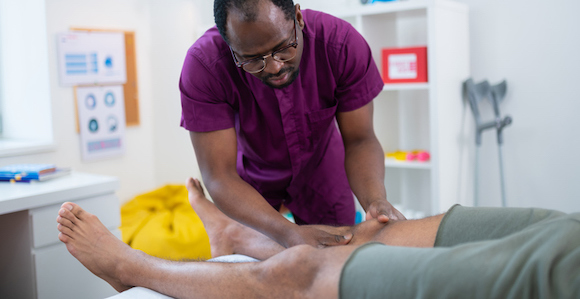
Physical therapy can help, too. Talk with your therapist about exercises and rehab to address your continuing pain.
|
| |
|
For Knee Replacement Patients:
There are several minimally invasive techniques for treating pain after a knee replacement, particularly if other pain-relief strategies have not worked:
-
Transcutaneous Electrical Nerve Stimulation (TENS) – This involves a small, battery-powered device connected to a pair of electrodes that are attached to your skin near the knee. The device sends a mild electrical current through the skin (for about 5-15 minutes), stimulating the nerves and relieving pain.
-
Genicular Nerve Block and Neurotomy – The nerve block involves injecting a local anesthetic into the nerves surrounding the knee. If you have significant pain relief several hours after this procedure, you’re considered a good candidate for a genicular neurotomy, which involves transmitting radio frequency waves to these nerves for at least 90 seconds to create nerve scarring that blocks pain signals to the brain.
-
DRG Stimulation – This procedure, sometimes done in knee replacement patients with chronic pain months after surgery, provides relief by stimulating the dorsal root ganglion, a collection of nerves near your spinal canal. A device connected to multiple leads that can conduct electricity is implanted beneath the skin. Electrical signals sent to the area needing stimulation block pain signals to the brain.
-
Acupuncture – Some studies have found that this ancient technique of inserting hair-thin needles at specific points in the body can manipulate nerves to relieve pain and swelling. Acupuncture is thought to work best shortly after total knee replacement surgery, to avoid or delay the use of opioid pain medication, but it may also have some benefits weeks into recovery.
|
| |
|
More Pain-Relief Strategies
Regardless of whether you’ve had a hip or a knee replacement, if you have continuing pain, ask your surgeon about other non-medical pain-relief strategies, including:
-
relaxation techniques
-
guided imagery
-
medical hypnosis
Learn more about pain-relief options.
|
| |
|
|
This information is not intended to provide individual medical advice about you or your child. Always seek the advice of a physician or other qualified healthcare provider with any questions you have about your health. Never disregard, avoid or delay contacting a doctor or other qualified professional because of something you have read in our emails, webpages or other electronic communications.
|
| |
|
|
|